
Stay on the kit
This one is about the instrument rather than the curriculum. A kit that maps itself correctly the first time, lessons that admit when they are asking for more hands than you have, and a way to start over without putting a stick down.
Your kit plays the drum you hear
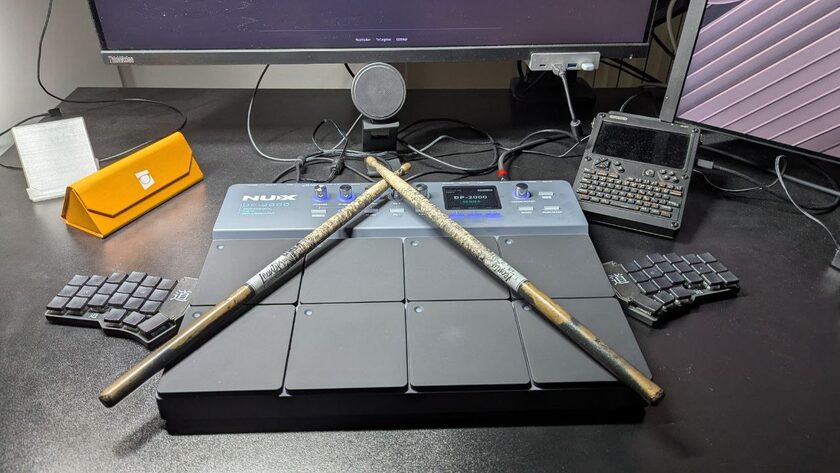
Plug in a NUX DP-2000 and it is recognised, drawn and mapped — kick, snare, both hi-hats, three toms and a ride, each pad playing the drum it plays on the module itself. Nothing to re-map afterwards.
Getting there fixed something larger. Setup used to treat a pad's note as a statement about which drum it was, on the reasonable grounds that a drum module naming its own pads knows better than any list we could write. The DP-2000 is the counterexample: its pads send notes that sit squarely inside the General MIDI drum range and mean something else entirely. Pad five sends the note for "High Tom" and plays a kick. So every pad came out wrong — not slightly wrong, all eight of them — and the only way out was to correct each one by hand. A kit can now say that its notes carry no such meaning, and what it actually plays is believed instead.
Lessons that need more hands than you have
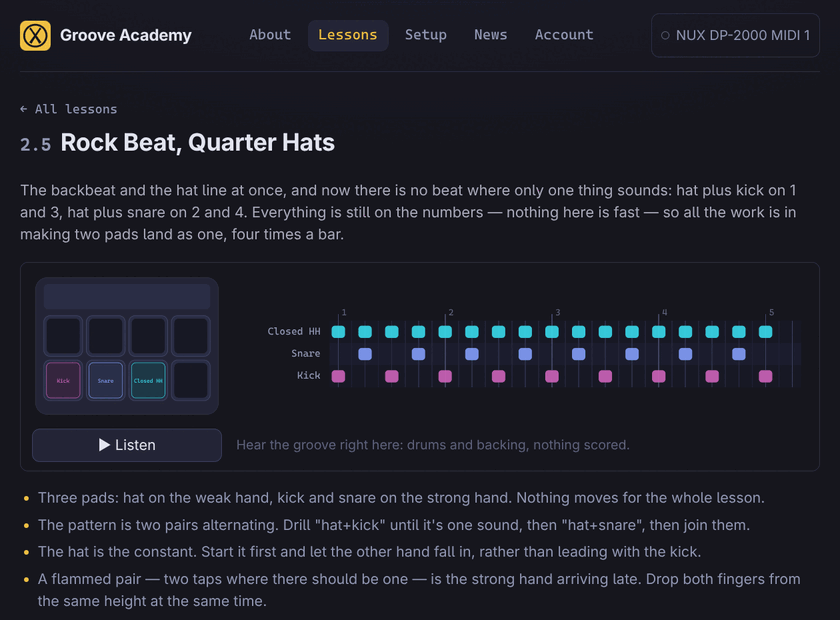
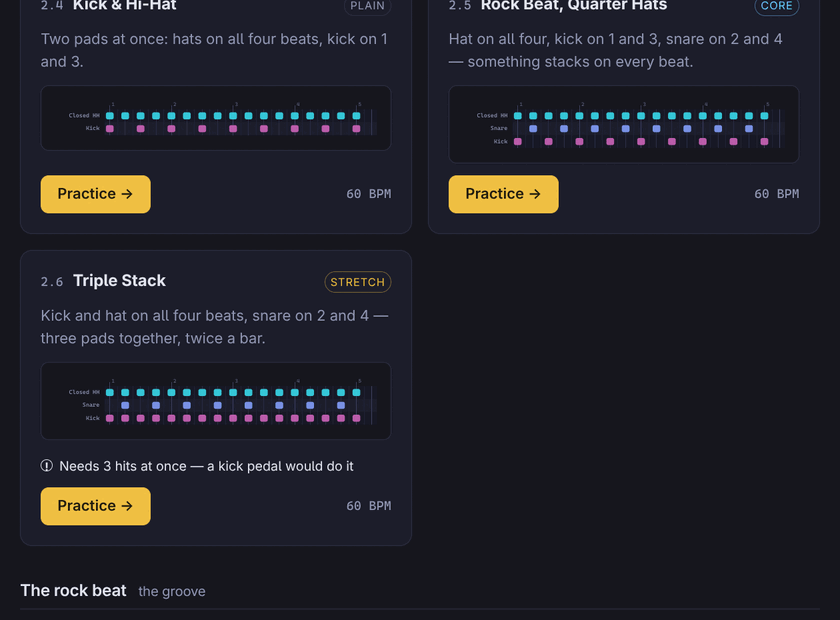
Twenty-seven of the ninety-two lessons put three hits on the same instant — a kick, a snare and a hat landing together. Two sticks and no pedal cannot play that. Until now those lessons opened anyway and quietly scored a third of every bar as misses you had no way to hit.
They now say so before you start, on the card and on the lesson page, along with what would change the answer — usually a kick pedal, which frees the hand you were short of. They still open, and you can still try. The point is that the app should not let you discover it mid-bar.
Start over without reaching for the screen
A take goes wrong and you want it again from the top; it goes well and you want the next one. Both used to mean putting a stick down.
Strike two opposite corners of your kit together and it happens. One diagonal starts a run, and restarts the lesson from the result screen. The other moves you on to the next lesson, and past the quote without rating it — skipping a quotation is not an opinion about it.
While a lesson is actually playing, both are ignored. On a drum kit the corners are real drums, and kick-with-ride is something you play on purpose; a run is the one moment where a stray pair would cost you a good take. Sound and the controller still come up on your first click of a visit, as they always have — after that, the kit drives everything.
The chip knows your kit is plugged in
The instrument in the top corner used to confirm a live connection only while you were inside a lesson or the setup wizard. Everywhere else it fell back to naming the kit without committing to whether it was really there. It now tells you on every page.
That is the release. Questions, bugs and things that felt wrong are all welcome on Mastodon — and the kit is waiting in the lessons.